

Inside a Loupa patient pathway.
Clinically approved information, practical guidance and simple tools that help patients navigate, prepare and participate in their care.
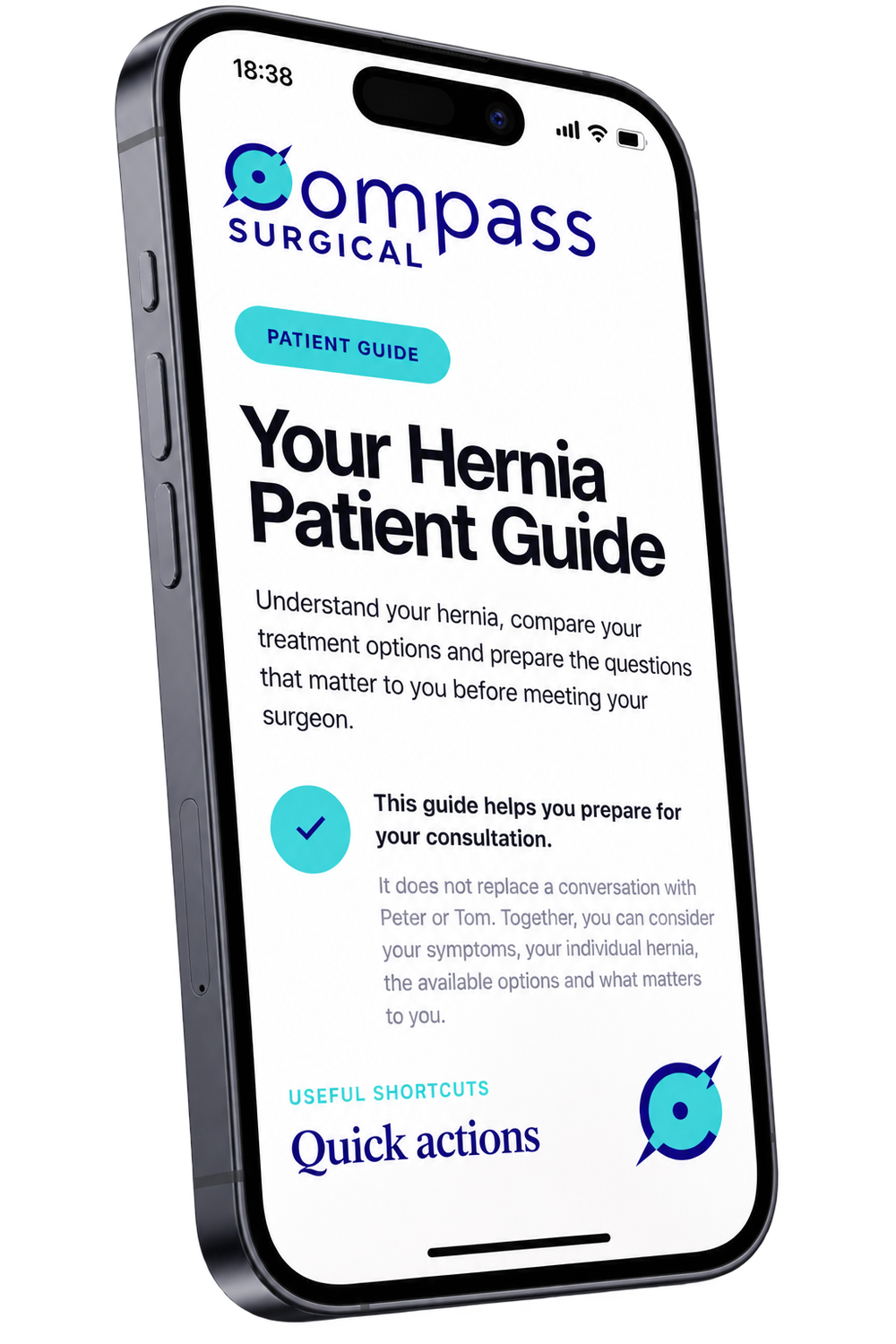
More than information on a screen.
A Loupa pathway brings clinical information, practical guidance and patient interaction into one experience that can be used across care.
Understand
Read clinical information in clear, manageable sections that can be revisited.
ExploreParticipate
Save questions, identify priorities and prepare for the next clinical conversation.
ExplorePrepare and connect
Keep practical instructions, contacts and getting-help information close at hand.
ExploreReturn when needed
Revisit the pathway as questions, decisions and practical needs change.
ExploreThe pathway stays familiar while the information changes with the stage of care. The sections below show how those patient functions work in practice.
Information designed to be understood and revisited.
Loupa breaks clinical information into clear, purposeful components so patients can absorb what is useful now and return to the detail when they need it.
Different information needs different treatment.
A definition, a list of symptoms, a warning sign and a decision point should not all look like the same paragraph. Loupa uses different visual patterns to make the role of each piece of information clearer.
The aim is not to make clinical information shorter at all costs. It is to make the information easier to navigate, interpret and return to.
What type of hernia do I have?
Hernias are named according to where the weakness occurs. The location can influence symptoms and treatment options.
Inguinal hernia
A hernia in the groin that may cause a lump, aching or discomfort.
Umbilical hernia
A weakness at or close to the belly button, often seen as a visible bulge.
Epigastric hernia
A weakness in the midline of the upper abdominal wall.
Incisional hernia
A hernia developing at or close to a previous surgical incision.
What symptoms can a hernia cause?
What does “reducible” mean?
A reducible hernia is one where the contents can move back through the opening in the abdominal wall, either by themselves or with gentle pressure.
It may therefore be more obvious when standing and much less noticeable when lying down.
What changes should I take seriously?
A hernia that suddenly becomes very painful, firm, increasingly swollen or no longer goes back in needs prompt medical assessment.
Severe or rapidly worsening symptoms need urgent medical care rather than waiting for a routine appointment.
Does having a hernia mean it needs treatment?
Not necessarily. The next chapter looks at when observation may be reasonable and when treatment becomes more worthwhile.
Demonstration adapted from the live Compass Surgical hernia patient pathway. Clinical content has been shortened here to demonstrate the information design.
Turn reflection into something the patient can bring back.
Patients often think of questions, concerns and priorities after the clinical conversation. Loupa gives them simple ways to capture those thoughts and prepare for the next one.
While reading, reflecting or talking with whānau.
Keep it with the rest of the pathway.
Think about what matters most before deciding.
Use the workspace to support the next discussion.
Questions are part of the consultation, not a failure of it.
Loupa makes space for patients to keep thinking between clinical conversations and gives those thoughts somewhere useful to go.
The technology does not make the decision. It helps the patient arrive at the next conversation with clearer questions and a better sense of what matters to them.
Save a question for your appointment
Try saving one or more questions below.
What would make treatment worthwhile?
Choose any priorities that feel important.
Ready for your consultation?
Review what matters to you and the questions you still want to discuss.
What matters to me
Choose a priority above to see it here.
My questions
Save a question above to see it here.
This demonstration does not save or send anything. In a configured Loupa patient pathway, saved questions and priorities can remain on the patient's own device.
If questions remain, give patients a route back.
Reflection does not always finish when the consultation ends. Where a service supports it, Loupa can help patients signal that they still have questions they would like to discuss.
Close the loop between thinking and talking.
A saved question is useful, but only if there is an opportunity to bring it back into care. Loupa can make that next step visible.
Loupa can create a clearer pathway back to the team. It does not replace clinical judgement, communication or the final consent process.
Let your surgical team know
You have 2 saved questions that have not yet been marked as discussed.
If you would like these addressed before your operation, you can let the Compass Surgical team know. Your saved questions stay on this device and are not sent automatically.
In the live pathway, this opens the patient's own email app. This demonstration only shows the message preview.
The saved question text is not inserted into the email.
Their own email app opens and they decide whether to send.
Follow-up, escalation and clinical documentation remain the responsibility of the healthcare service.
Reduce avoidable uncertainty.
Some uncertainty needs a clinician. Some simply comes from not knowing where to go, what will happen next, who will be there or whom to call.
This belongs in the conversation.
Should I have treatment? What happens if I wait? What does this risk mean for me?
Much of this can be cleared in advance.
Where do I park? Which entrance do I use? What will recovery feel like? Who do I call if I am worried later?
Clear the practical uncertainty before it competes with the clinical conversation.
A bespoke pathway can answer the questions that do not require clinical judgement, leaving more attention for the decisions that do.
Where the information lives matters. A phone is with the patient in the car park when they cannot remember the entrance, and at 2am when something about recovery worries them.
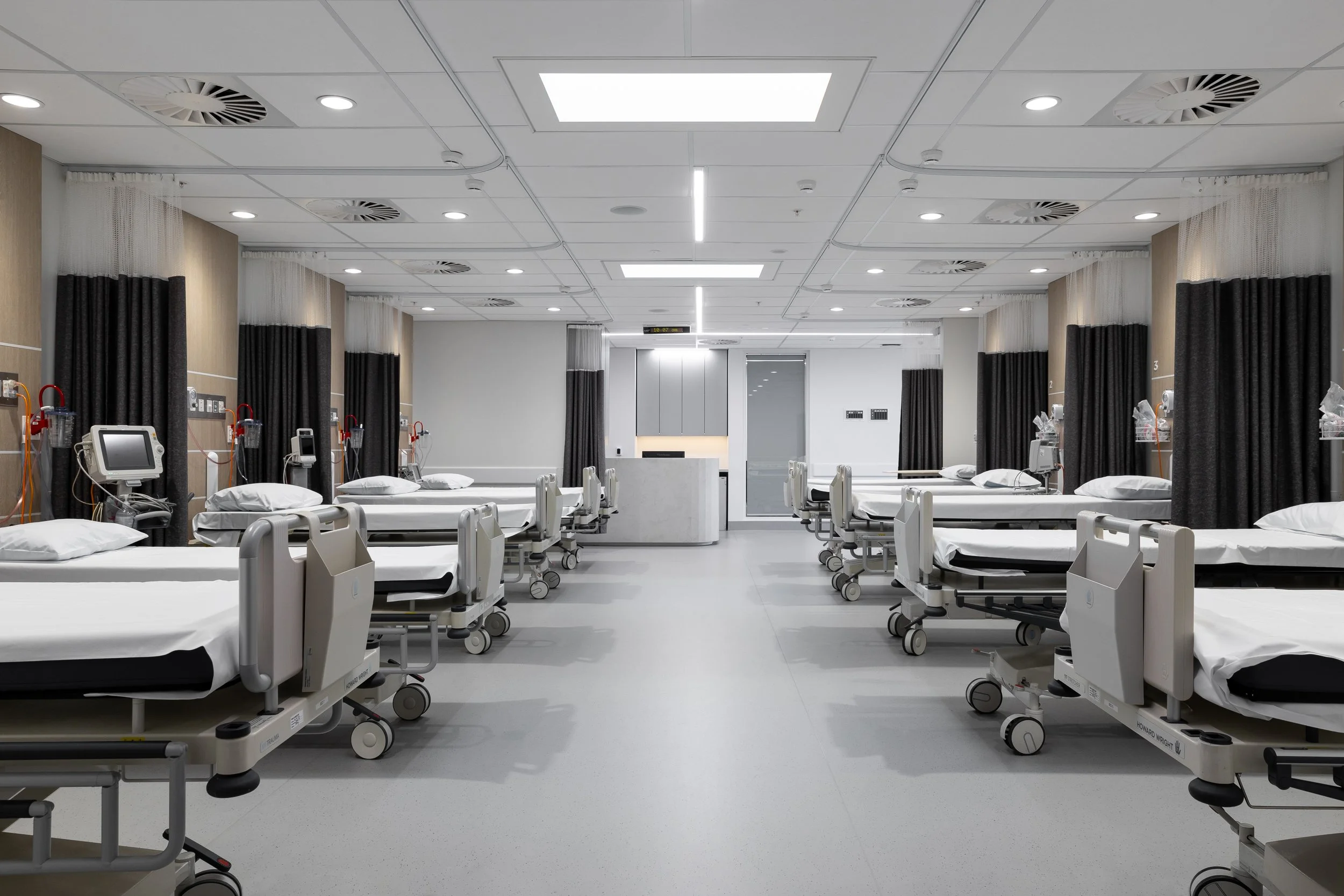
Insert actual Compass Surgical recovery-area image here
Local images help make the unfamiliar more recognisable before the patient arrives.
You may feel drowsy and have a dry mouth. The recovery area may feel bright and busy at first. A nurse will be nearby, may ask your name again, and will check how you are feeling as you wake.
Directions before arrival, preparation on the day, and contact and recovery information afterwards can all remain accessible from the same pathway.
Useful interaction with clear data boundaries.
Patients can save questions, identify priorities and prepare for a conversation without every thought needing to become centrally stored patient data.
Not every patient interaction needs to become another record.
Loupa separates patient reflection from clinical communication, so the patient can use the pathway actively while remaining clear about what stays with them and what is shared.
Patient preparation is not the clinical record. Loupa helps the patient prepare for communication. The provider remains responsible for the clinical conversation, documentation and final consent.
Saved for the next conversation.
Values and concerns I want to remember.
A patient-controlled preparation aid.
The patient's own email app can open with a generic message stating that outstanding questions remain. The saved question text itself does not need to be inserted into the message.
Patient reviews before sendingMonitor the agreed contact route so the patient's request reaches the service.
Clarify the concern, provide advice or arrange further clinical discussion.
Record clinically relevant communication and decisions in the service's own systems.
Loupa provides the route back. The healthcare service remains responsible for receiving, responding to and documenting the clinical communication.
Preparation, reflection and a clearer route back.
Controlled information, saved questions, priorities, patient feedback and deliberate contact with the care team.
Individual advice, documentation and consent.
Patient-specific interpretation, answering questions, changed treatment plans, clinical records and the final informed consent process remain with the treating team.
If the explanation is not landing, improve the explanation.
Patient information should not become static once it is published. Simple feedback and understanding prompts can help identify where an explanation may deserve another look.
The patient should not be the only thing being assessed.
Loupa can ask whether an explanation was useful and whether a core idea landed, without turning patient education into an exam.
Feedback is a signal, not proof. A click, a completed chapter or a correct answer does not establish that informed consent has occurred.
Was this section helpful?
Your feedback helps us improve this guide.
Check your understanding
This is not a test. Choose the answer that best reflects the main message.
The purpose is to reinforce the explanation or identify something worth revisiting, not to certify understanding or consent.
The pathway can report back on itself.
Individual responses become useful when patterns help the service identify where patient information may need review.
Collect simple signals about usefulness, engagement and key understanding prompts.
Look for recurring patterns rather than interpreting one patient's response in isolation.
Refine wording, structure, emphasis or supporting explanation where the evidence suggests it is needed.
Updated clinical content returns through the agreed review and version-control process before publication.
Helpful / Not yet responses, understanding prompts and engagement data can identify areas worth examining.
Completion, engagement or a correct answer cannot replace the patient-specific clinical conversation and documentation required for informed consent.
Explore a live patient pathway.
Loupa combines clinically approved information, practical preparation and patient participation in pathways designed around the care patients are actually receiving.
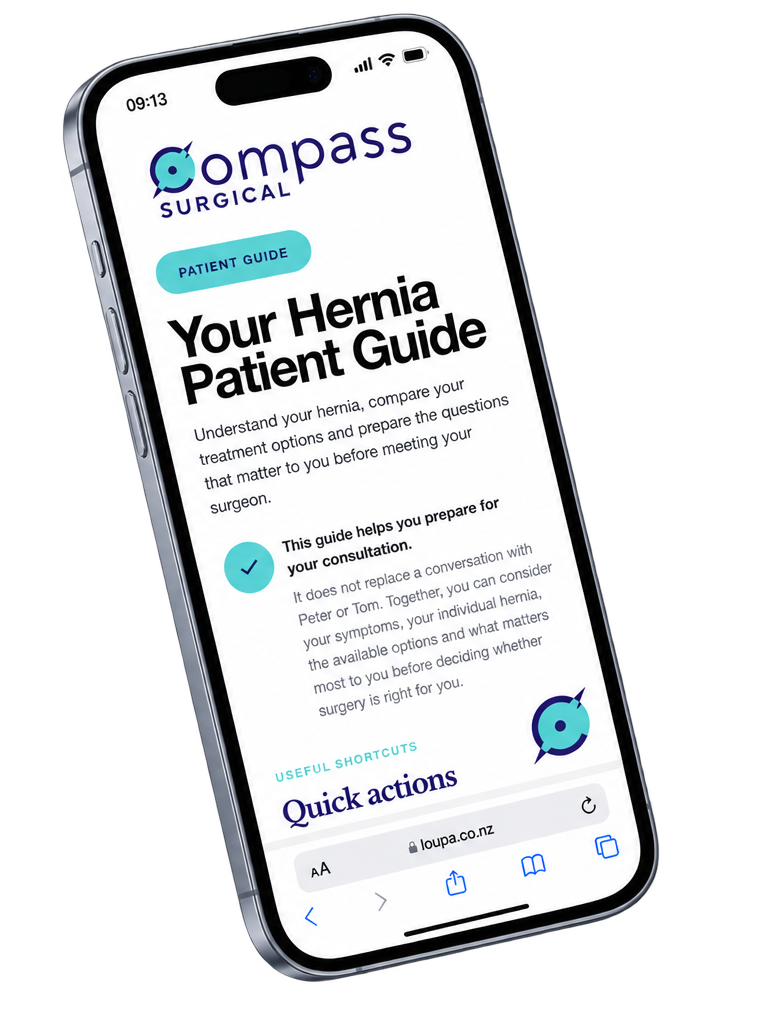
Hernia patient pathway
Supports the patient after specialist assessment as they consider treatment options, risks, recovery and questions they want to bring back to their surgeon.
Open live pathway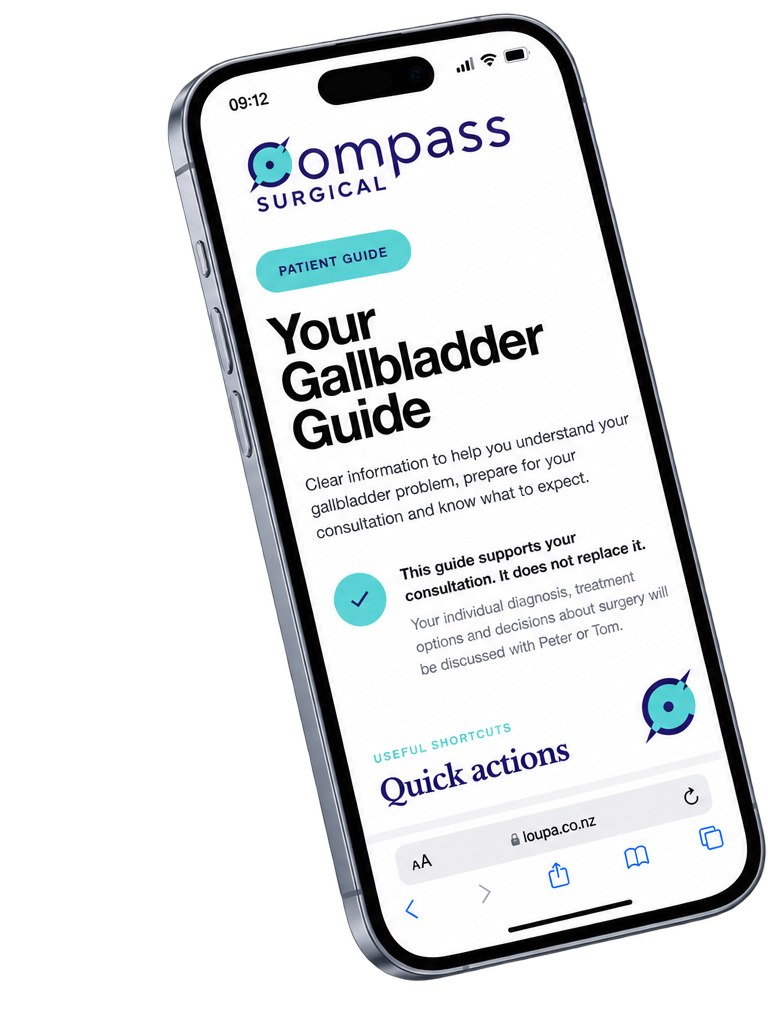
Gallbladder patient pathway
Helps patients understand gallstone disease, when surgery may be appropriate, material risks and what to expect before and after treatment.
Open live pathway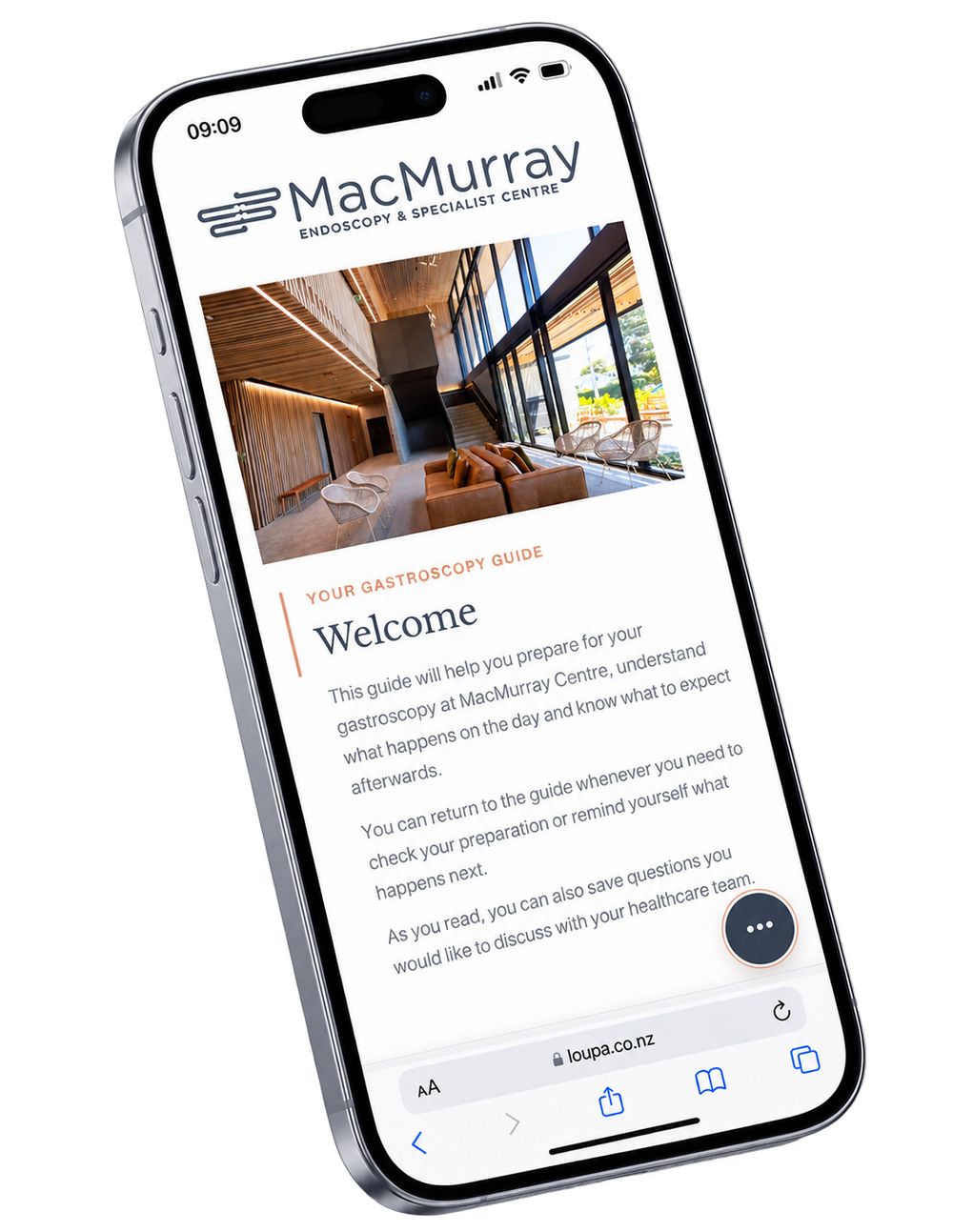
Gastroscopy patient pathway
Prepares patients for gastroscopy with procedure information, fasting and medication guidance, what happens on the day, results, risks and clear routes for getting help.
Open live pathwayA surgical pathway may begin after specialist assessment, while a direct-to-test procedure such as gastroscopy may appropriately provide preparation information before the procedure. Loupa is configured around the clinical pathway, not a single fixed sequence.
Turn patient information into part of the clinical pathway.
Loupa works with healthcare services to structure, personalise and govern patient information around the decisions, preparation and practical questions patients face in real care.
Built around real clinical pathways, not generic patient information.