
Your Lumps & Bumps
Guide
Clear information to help you understand your lump or skin lesion, prepare for your consultation and know what to expect.
Your individual diagnosis, treatment options and decisions about investigation or removal will be discussed with Peter or Tom.
Quick actions
A quick welcome
Peter and Tom explain how this guide can help you understand your lump, bump or skin lesion, prepare for your appointment and make the most of your consultation. You can also share it with a family member or support person so they can read along and help you think of questions.
Who are you seeing?
Select your surgeon so you can quickly find the information most relevant to your appointment. As you read, save any questions you would like to discuss. Your support person can help you think of questions too.
Your lumps & bumps journey
Work through the guide in order or select the section that is most useful to you.
Not every lump needs a scan, biopsy or operation. The aim is to understand what it is likely to be and decide what, if anything, should happen next with your surgeon .
Understanding your lump or skin lesion
Finding a new lump can be worrying. Fortunately, most lumps seen in surgical practice are benign, but understanding what the lump is remains an important first step.
What kinds of lumps are common?
Lumps can arise from the skin itself, fatty tissue, glands, connective tissue or structures beneath the skin.
Cysts
Small sacs beneath the skin that may contain keratin, fluid or other material. They can remain quiet for years or sometimes become inflamed or infected.
Lipomas
Benign fatty lumps that are often soft, mobile, slow-growing and painless.
Skin and soft-tissue lesions
These include skin tags, moles, benign skin growths, enlarged lymph nodes and other superficial lumps.
What is a cyst?
A cyst is one of the most common lumps encountered in surgical practice. It usually develops within or just beneath the skin.
Cysts commonly occur on the scalp, face, neck, back and chest. Many cause no symptoms, although they can gradually enlarge, become uncomfortable or become inflamed or infected.
What is a lipoma?
A lipoma is a benign growth of fatty tissue. Typical lipomas are often soft, mobile and slow-growing.
They commonly occur on the shoulders, back, arms and trunk. Although a typical lipoma is not dangerous, some people choose removal because of discomfort, increasing size or cosmetic concerns.
Are most lumps serious?
No. The majority of skin and soft-tissue lumps assessed in surgical practice are benign and pose little risk to long-term health.
Some require no treatment at all.
When should a lump be checked?
Most lumps are benign, but medical assessment is sensible if a lump:
- Is growing rapidly
- Is becoming increasingly painful
- Bleeds or develops ulceration
- Changes in colour or appearance
- Feels fixed to deeper tissues
- Continues to enlarge
- Is associated with unexplained weight loss or other concerning symptoms
How do we work out what it is?
Many common lumps can be identified by taking a careful history and examining the area.
The history of the lump is often just as useful as how it looks or feels.
Can the diagnosis be made just by examining it?
Often, yes. Many common lumps have characteristic features that can become apparent during examination.
For example, lipomas are often soft and mobile, while cysts commonly arise within the skin and may have a small central opening.
Not every lump is straightforward, however, and sometimes further investigation is useful.
At your consultation, your surgeon will examine the lump and discuss whether the likely diagnosis is clear or whether further investigation would be useful.
Save a question for your appointment
Tap a question and it will be added to your My questions list.
Was this section helpful?
Your feedback helps us improve this guide.
Does it need further investigation?
Many common lumps can be assessed from their history and examination alone. Sometimes a scan, biopsy or other test helps us understand the lump more clearly before deciding what to do next.
The first step is usually examination
The way a lump feels, where it sits, how long it has been present and how it has changed can provide a lot of useful information.
A typical superficial cyst or lipoma may have characteristic features, meaning no further investigation is needed before discussing whether it should simply be observed or removed.
When might further investigation help?
Additional testing may be useful when the diagnosis is uncertain or when more information is needed before deciding on treatment.
Ultrasound
Ultrasound is often useful for superficial lumps because it can show whether a lump is solid or fluid-filled, how deep it is and its relationship to nearby tissues.
It can sometimes support a likely diagnosis such as a cyst or lipoma, although it does not always provide a definite answer.
Other imaging
Larger, deeper or less straightforward lumps may occasionally require more detailed imaging such as MRI or CT.
These tests are not routinely required for every superficial lump. They are used when the extra anatomical information is likely to help with diagnosis or planning.
Biopsy
A biopsy means taking a sample of tissue so it can be examined under a microscope.
This may be useful when knowing exactly what a lump is before treatment would change what happens next.
Is a biopsy always needed before removal?
No. Some small superficial lumps can be removed completely and the whole specimen then sent to the laboratory for examination.
In other situations it may be safer or more useful to obtain imaging or a biopsy first.
More testing is not always better
A test is most helpful when its result could change what happens next. If the diagnosis is already clinically clear and the management would be the same, additional investigation may simply add delay or expense without improving the decision.
Your surgeon will explain whether the diagnosis appears clear from examination or whether further investigation is likely to add useful information.
There are three common pathways
The diagnosis is sufficiently clear from your history and examination.
A scan would provide useful information about the lump before deciding what to do.
A biopsy or removal followed by pathology is needed to establish exactly what the lump is.
Save a question for your appointment
Tap a question and it will be added to your My questions list.
Was this section helpful?
Your feedback helps us improve this guide.
Does it need to be removed?
Not every lump needs surgery. The decision depends on what the lump is likely to be, whether it is causing problems, how it is changing and what matters most to you.
When is it reasonable to leave a lump alone?
Observation can be a very reasonable option when the diagnosis appears benign, the lump is not causing problems and there is no strong clinical reason to remove it.
Leave it alone
- The lump appears benign
- It is not painful or troublesome
- It is stable or growing very slowly
- You are comfortable with observation
- Removing it would offer little practical benefit
Why might removal be recommended?
There are several different reasons why removal may become the better option.
The lump is painful, tender, repeatedly inflamed or catches on clothing or equipment.
The lump is getting larger or changing in a way that makes further assessment or treatment appropriate.
Removal may provide a definite tissue diagnosis when examination or imaging has not answered the question completely.
Some cysts repeatedly become inflamed, infected or discharge, making definitive removal more useful.
A visible or awkwardly placed lump may bother you enough that removal is worth considering.
What if I mainly want it removed because of how it looks?
That can still be a valid reason to discuss removal, but it is important to balance the appearance of the lump against the scar that surgery will leave behind.
A lump can often be removed successfully, but no operation can remove tissue without leaving some form of scar.
Lump versus scar
For some people the benefit of removing the lump clearly outweighs the scar. For others, particularly when the lump is harmless and not causing symptoms, leaving it alone may be the better choice.
Does the size of the lump matter?
Size can influence the decision, but it is only one part of the picture. Location, depth, symptoms, rate of growth and likely diagnosis may all be equally important.
A small troublesome lump may be worth removing, while a larger benign lump that causes no problems may sometimes be safely observed.
How much does my preference matter?
It matters a great deal when there is more than one reasonable option. The decision should reflect both the clinical situation and your own priorities.
Your surgeon will explain whether observation and removal are both reasonable options, and what the likely advantages and disadvantages are in your particular case.
What matters most?
Save a question for your appointment
Tap a question and it will be added to your My questions list.
Was this section helpful?
Your feedback helps us improve this guide.
If removal is right for me
If you decide to have the lump removed, the exact procedure will depend on what the lump is, where it is and how large or deep it is.
What does removing a lump involve?
In most cases an incision is made over or close to the lump so that it can be separated carefully from the surrounding tissue and removed.
The wound is then closed, usually with stitches, and covered with an appropriate dressing.
Will I be awake?
That depends on the procedure. Some lumps can be removed using local anaesthetic, which numbs the area while you remain awake.
Other procedures may be better performed under sedation or a general anaesthetic. The appropriate option depends on the size and location of the lump, the operation required and your individual circumstances.
Seeing the clinical environment beforehand can make the day feel more familiar.
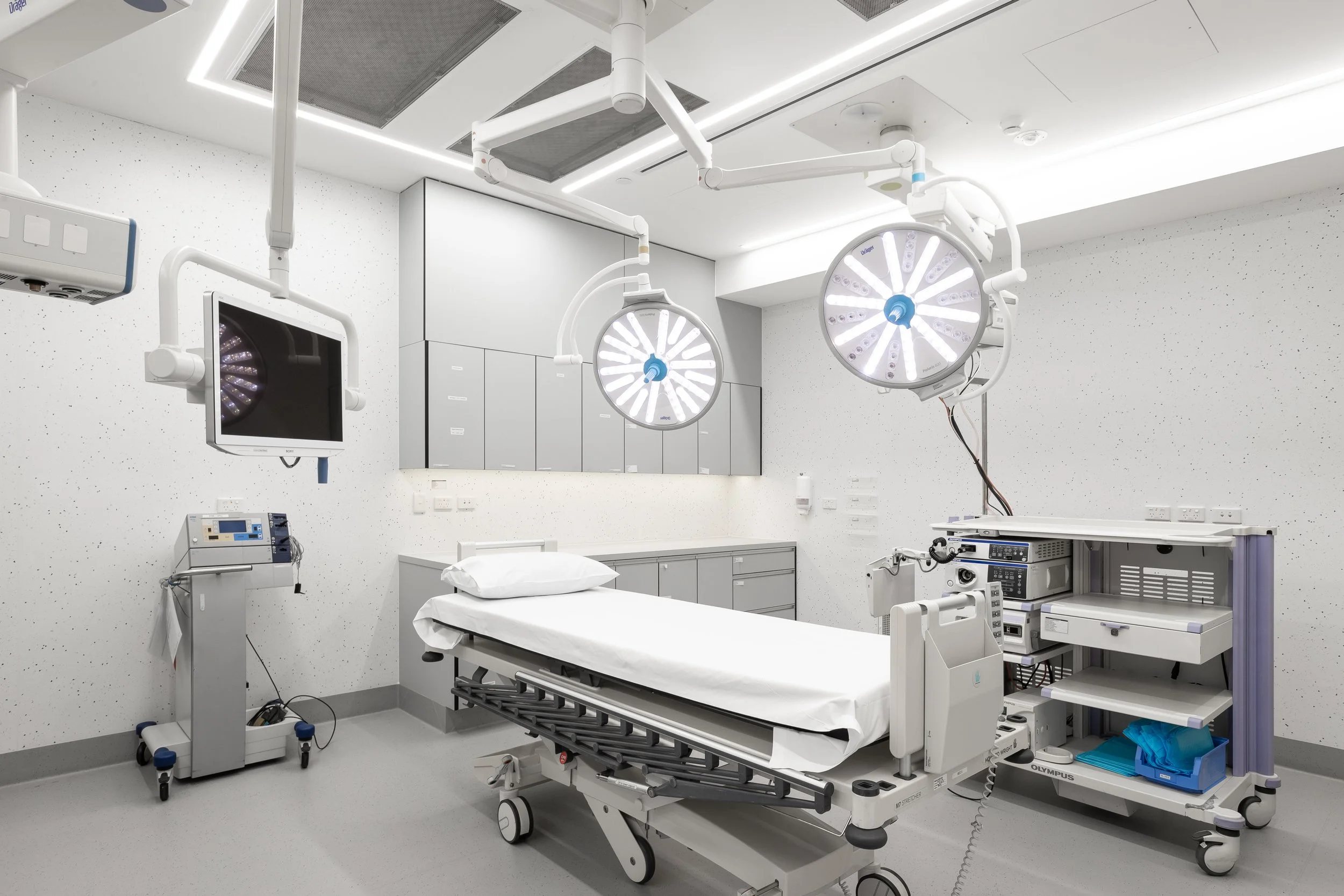
What happens during the procedure?
The lump and planned procedure are confirmed before treatment begins.
The appropriate local or general anaesthetic is given.
An incision is made and the lump is carefully separated from the surrounding tissue.
The wound is closed and a dressing is applied.
When appropriate, the removed tissue is sent to the laboratory for pathology.
Will there be a scar?
Yes. Removing a lump requires an incision, so a permanent scar is expected.
Its size and position depend on the lump and the safest way to remove it. Scars usually change considerably as they mature and become less noticeable with time.
What happens to the stitches?
The type of closure depends on the wound. Some stitches dissolve themselves, while others need to be removed later.
You will be told how the wound has been closed and what wound care or follow-up is required.
What happens to the lump afterwards?
Tissue removed during surgery may be sent to the laboratory for examination under a microscope. This provides the final pathology diagnosis.
Your result will be discussed with you as part of your follow-up.
Before deciding on removal, your surgeon will explain the planned procedure, the anaesthetic, the expected scar and whether there is anything unusual about the location or depth of your lump.
Save a question for your appointment
Tap a question and it will be added to your My questions list.
Was this section helpful?
Your feedback helps us improve this guide.
Understanding the risks
Removing a lump or skin lesion is usually straightforward, but every procedure has possible complications. Understanding these helps you weigh the benefits of removal against the downsides.
Common early problems
Some discomfort, swelling and bruising around the wound are expected after many procedures and usually improve as healing progresses.
The wound can be sore, particularly during the first few days. Pain should generally improve rather than progressively worsen.
Mild bruising or swelling around the operation site can occur as part of normal healing.
Bleeding can occasionally collect beneath the wound and cause increased swelling, bruising or discomfort.
Infection can cause increasing redness, warmth, swelling, discharge or worsening pain around the wound.
Wound healing problems
Occasionally a wound can heal more slowly than expected or part of the wound can open. This can mean additional dressings or a longer period of wound care.
Healing can be influenced by the location of the wound, tension on the skin, smoking, some medical conditions and other individual factors.
Scarring
Every operation through the skin leaves a scar.
Scars are often more visible early on and usually soften and fade as they mature. Occasionally a scar can remain raised, thickened, tender or more noticeable than expected.
Numbness or altered sensation
Small skin nerves may be affected when tissue is removed. This can cause numbness, tingling or altered sensation near the scar.
Sensation may improve with time, although in some cases a small area of altered sensation can persist.
Can the lump come back?
Some types of lumps can recur after treatment. The chance of this depends on the underlying diagnosis and how the lump can safely be removed.
If recurrence is particularly relevant to your lump, your surgeon will discuss this with you.
Location matters
Some lumps lie close to important nerves, blood vessels, muscles or other structures. If this affects your procedure, it will be discussed with you before surgery.
What if the pathology result is unexpected?
Removing a lump can sometimes provide information that was not certain beforehand. The pathology result may therefore occasionally lead to further investigation, another procedure or referral for specialist treatment.
This is one reason why pathology and follow-up remain an important part of the pathway after removal.
Your surgeon will focus on the risks that are actually relevant to your procedure, rather than simply giving you a long generic list.
When should I ask for help?
Contact the hospital or surgical team if you are concerned about your recovery, particularly if you develop:
- Increasing rather than improving pain
- Increasing redness, warmth or swelling around the wound
- Pus or unexpected discharge
- Persistent or significant bleeding
- The wound opening
- Fever or feeling increasingly unwell
Save a question for your appointment
Tap a question and it will be added to your My questions list.
Was this section helpful?
Your feedback helps us improve this guide.
Getting ready and recovering afterwards
A little preparation beforehand can make the day of your procedure easier and help your recovery get off to a good start.
Where will my procedure take place?
Most Compass Surgical procedures are performed at MacMurray Centre. Some procedures may take place at Ormiston Hospital.
Your booking information will confirm the location, arrival time and any specific instructions for you.
What should I expect before surgery?
The facility will usually contact you before your procedure to confirm practical details such as when to arrive and what you need to do beforehand.
Your procedure time and your arrival time are not necessarily the same.
Make sure you know when you need to stop eating and drinking.
Follow the advice you have been given about which medicines to take or temporarily stop.
If you are having sedation or a general anaesthetic, arrange for a responsible adult to take you home and be available afterwards.
Eating and drinking before surgery
For procedures requiring fasting, the usual Compass instructions are:
No food for 8 hours before your scheduled surgery time.
Stop clear fluids 2 hours before your scheduled surgery time.
What about my regular medicines?
Your medication instructions will usually be included with your booking information and may also be discussed with you by the anaesthetist.
Do not stop important regular medicines simply because you are having surgery unless you have been advised to do so.
What should I bring?
If your procedure involves sedation or a general anaesthetic, you will need someone to collect you and stay available to support you after discharge.
If there is anything unusual about your preparation, your surgeon or the anaesthetic team will discuss it with you.
Knowing where you are going can make the day feel easier
Your booking information will confirm the facility and arrival time. The next part of the guide explains what happens once you arrive.

What happens first?
When you arrive, the hospital team will check you in and confirm the details of your procedure.
You may be asked again about your medications, allergies, fasting and general health. Repeating these checks is a normal part of making sure everything is correct before treatment.
The team will confirm your identity, procedure and practical details for the day.
A nurse will complete the usual pre-procedure checks and help you get ready.
The planned procedure and the site of the lump will be checked before surgery.
If you are having sedation or a general anaesthetic, the anaesthetist will review you and discuss the plan.
Will I see my surgeon before the procedure?
Yes. Before the procedure, your surgeon will confirm the planned treatment with you and answer any final questions.
The operation site may also be marked where appropriate.
Confirming consent
You should understand what procedure is planned, why it is being done and the important risks and alternatives before proceeding.
This is also an opportunity to raise anything that remains unclear.
What happens next?
The exact experience depends on whether your procedure is performed under local anaesthetic, sedation or general anaesthetic.
Awake, with the area numbed
You remain awake while local anaesthetic is used to numb the operation site.
Asleep for the procedure
If general anaesthesia is appropriate, you will be asleep while the procedure is carried out.
What happens in recovery?
After the procedure you will be looked after while the team checks that you are comfortable and recovering as expected.
If you have had sedation or a general anaesthetic, you will spend time in the recovery area while the anaesthetic wears off.
The team will make sure your pain is reasonably controlled, the wound is satisfactory and you are well enough to leave safely.
What will I be told before I leave?
You will receive instructions relevant to your procedure and wound. These may include:
If you have had sedation or a general anaesthetic, your support person should collect you and remain available during the early period after discharge.
The next step is recovering comfortably at home
The final part of this chapter explains wound care, activity, returning to work and when to contact the surgical team.

What should I expect after I get home?
Recovery depends on the size and location of the lump, the type of procedure and the anaesthetic you have had.
Some soreness, swelling and bruising around the wound can be expected early on. The overall trend should be towards gradual improvement.
Looking after the wound
Keep the wound and dressing cared for as instructed by the hospital team. The exact advice can differ depending on the type of dressing, the wound and how it has been closed.
Check for increasing redness, swelling, discharge or bleeding.
Leave, remove or replace the dressing according to the advice you have been given.
Some stitches dissolve. Others need to be removed. Your discharge information should make this clear.
Pain and discomfort
The area may be uncomfortable for the first few days. Use the pain relief recommended to you.
Pain should generally become easier rather than progressively worse. Increasing pain, particularly with redness, swelling or discharge, can be a sign that the wound needs review.
How active can I be?
Gentle movement is usually encouraged, but activity that pulls on the wound or causes significant discomfort may need to be limited while the area heals.
The amount of restriction depends greatly on where the lump was removed from and the size of the wound.
When can I return to work?
This depends on both the operation and your job. Someone with a small superficial wound and desk-based work may return sooner than someone whose work involves lifting, repetitive movement or physical activity.
If you need a specific plan for work, your surgeon can advise you based on the location of your wound and the demands of your job.
What about exercise?
Return gradually. Avoid activities that place significant tension across the wound until it is healing well.
If the procedure involves an area used heavily during sport or exercise, your return may need to be more gradual.
When can I drive?
Do not drive while affected by sedation or anaesthetic medication.
Once this has worn off, you should also be comfortable enough to control the vehicle safely and perform an emergency stop without significant pain or restriction.
When should I contact someone?
Contact the hospital where your operation was performed if you are concerned about your recovery, particularly if you develop:
- Increasing pain rather than gradual improvement
- Increasing redness, warmth or swelling around the wound
- Pus or unexpected discharge
- Persistent or significant bleeding
- The wound opening
- Fever or feeling increasingly unwell
Your recovery advice will be tailored to the actual procedure. Your surgeon will let you know if there are particular activities you should avoid or if an earlier review is needed.
Save a question for your appointment
Tap a question and it will be added to your My questions list.
Was this section helpful?
Your feedback helps us improve this guide.
Pathology and follow-up
Removing the lump is not always the final step. If tissue has been sent to the laboratory, the pathology result confirms what it is and helps determine whether anything further is needed.
What is pathology?
Pathology is the examination of tissue by a specialist laboratory. If your lump or skin lesion is sent for pathology, it is prepared and examined under a microscope.
The pathologist then produces a report describing what the tissue is.
Why is this important?
In many cases the pathology result confirms the diagnosis that was expected before surgery.
Occasionally it provides new information or identifies something that needs further assessment or treatment.
From removal to result
The specimen is labelled and prepared for the laboratory when pathology is required.
A pathologist examines the specimen and prepares a diagnostic report.
The pathology report becomes part of your clinical information.
Your diagnosis and any next steps can then be explained.
The result confirms a benign lump
Many lumps removed in general surgical practice are benign. When the pathology confirms this and the wound is healing well, no further treatment may be required.
What if the result is different from expected?
Occasionally pathology identifies something that was not certain from examination, imaging or the appearance of the lump during surgery.
If the result means you need further investigation, another procedure or specialist review, this will be discussed with you.
Will I have a follow-up appointment?
Compass Surgical patients are usually reviewed after their procedure. For many patients this is around six weeks after surgery, although the timing may vary depending on the procedure and how you are recovering.
Your wound, recovery and pathology result can be reviewed at this appointment.
An earlier review can be arranged if there is a concern about the wound, your recovery or another aspect of your treatment.
Your surgeon will explain the pathology result in the context of what was found during your consultation and procedure, and whether anything further is recommended.
Three useful things to clarify
Make sure you understand what the pathology showed.
For many benign lumps the answer will be no.
This depends on the diagnosis, wound and your recovery.
Save a question for your follow-up
Tap a question and it will be added to your My questions list.
Was this section helpful?
Your feedback helps us improve this guide.
You’re prepared for the conversation
You do not need to remember everything in this guide. The aim is to help you understand the pathway and make it easier to discuss the decisions that matter to you.